
Quantum-Brain
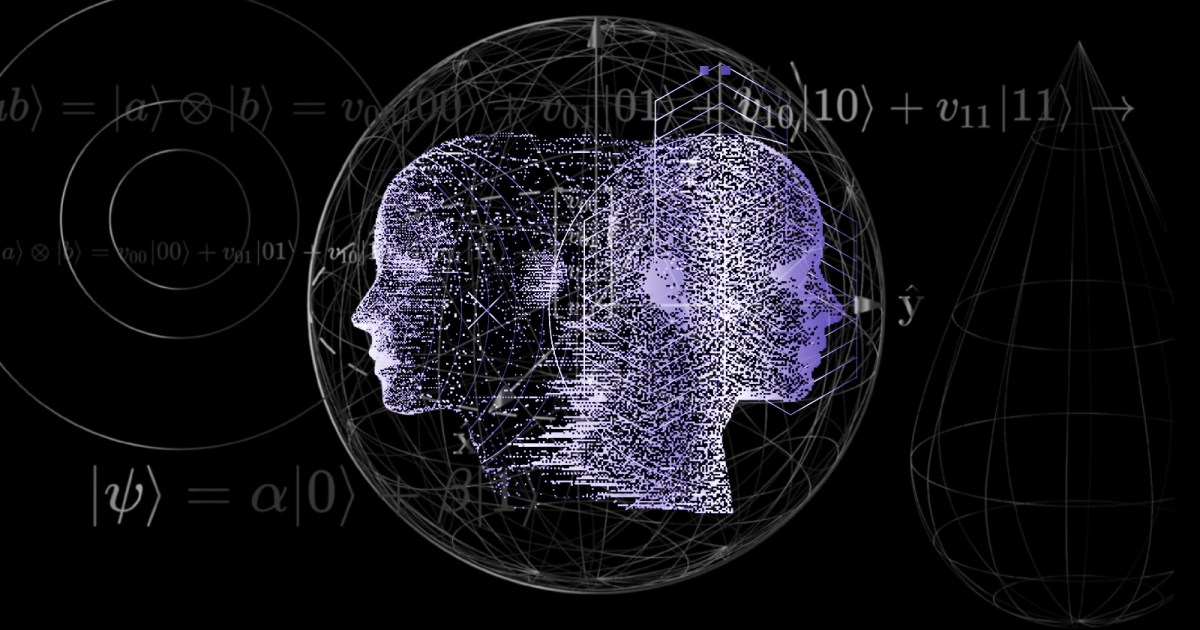
Human brain, often regarded as one of nature's most intricate computational systems, demonstrates remarkable abilities in information processing, adaptability, and creative problem-solving. Meanwhile, quantum mechanics, with its principles of superposition and entanglement, introduces a groundbreaking perspective on computation and information processing. Quantum-Brain aims investigate whether these two domains intersect in ways that could redefine our understanding of consciousness, decision-making, and even the nature of reality itself. In this project, we focuses on mapping the connections between quantum mechanics and the neural systems of the human brain. Additionally, it leverages quantum theories to develop advanced deep learning models that shed light on brain functionality. By bridging the quantum mechanics with neuroscience, this project represents a step toward decoding the mysteries of the mind and unlocking the next generation of scientific innovation.
Link
Link
Quantum Crystals Identification
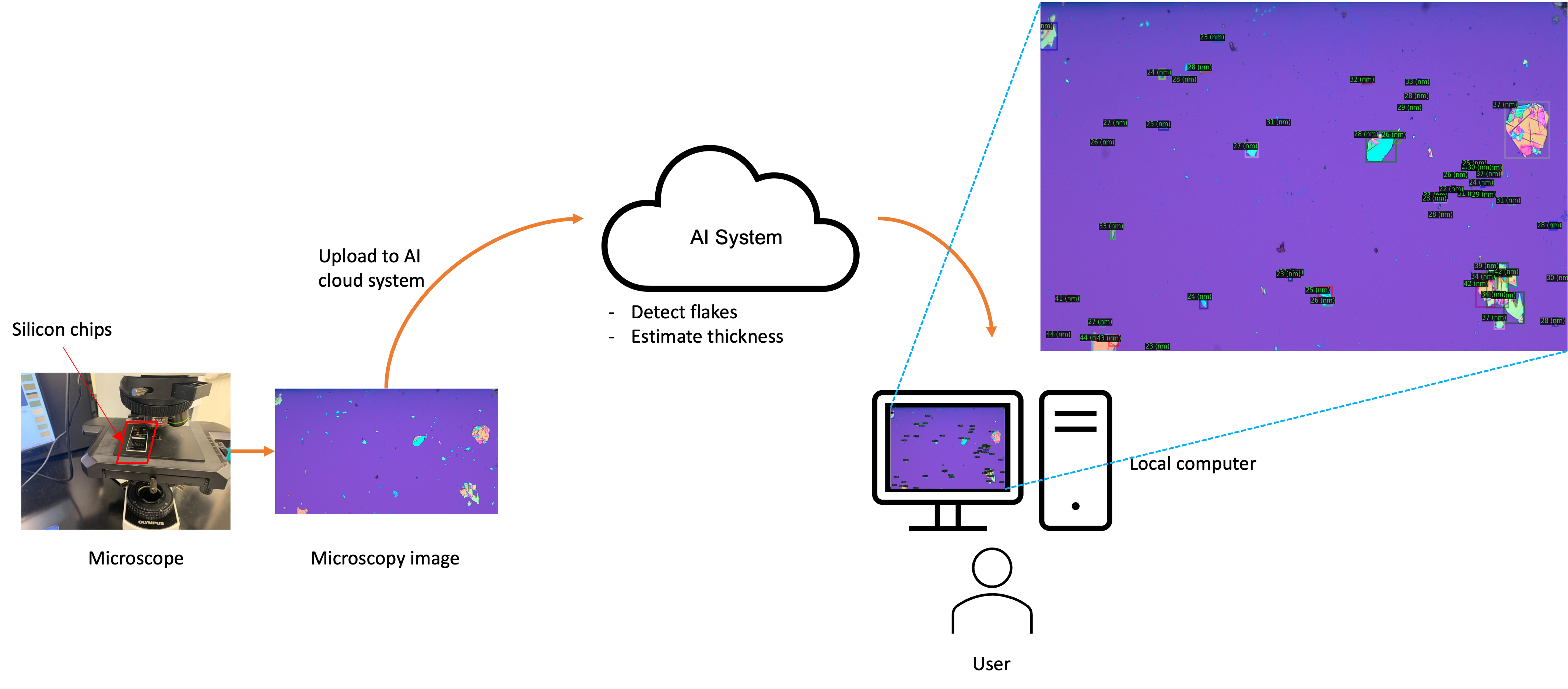
In quantum machine field, detecting two-dimensional (2D) materials in Silicon chips is one of the most critical problems. It is considered as one of bottlenecks in quantum research because of time and labor consumptions spent on finding a potential flake that might be useful. This progress takes hours to finish without any warranty that detected flakes being helpful. In order to speedup, reduce cost and efforts of this progress, we leverage computer vision and AI to build an end-to-end system for automatically identifying potential flakes and exploring their charactersitics (e.g thickness). We provide a flexible and generalized solution for 2D quantum crystals identification running on realtime with high accuracy. The algorithm is able to work with any kind of flakes (e.g hBN, Graphine, etc), hardware and environmental settings. It will help to reduces time and labor consumption in research of quantum technologies.
Link
Link

Quantum Optimization and Quantum Machine Learning
We have focused on the classic problem of the Capacitated Vehicle Routing Problem (CVRP) because of its real-world industry applications. Heuristics are often employed to solve this problem because it is difficult. In addition, meta-heuristic algorithms have proven to be capable of finding reasonable solutions to optimization problems like the CVRP. Recent research has shown that quantum-only and hybrid quantum/classical approaches to solving the CVRP are possible. Where quantum approaches are usually limited to minimal optimization problems, hybrid approaches have been able to solve more significant problems. Still, the hybrid approaches often need help finding solutions as good as their classical counterparts.
Link
Link
Quantum Machine Learning and Autonomous 2D Crystals Identification
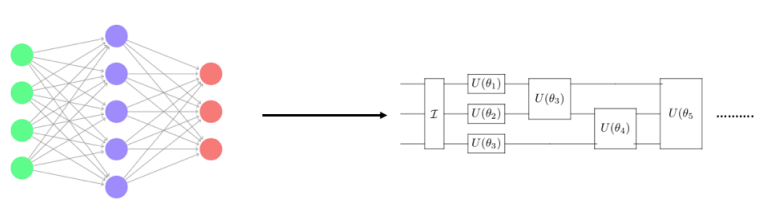
Classical neural network algorithms are computationally expensive. For example, in image classification, representing an image pixel by pixel using classical information requires an enormous amount of computational memory resources. Hence, exploring methods to represent images in a different paradigm of information is important. We proposed a parameter encoding scheme for defining and training neural networks in quantum information based on time evolution of quantum spaces.
Link
Link
Graduate Students Take Third Place in MIT's Algonauts Project 2023 Challenge
Xuan Bac Nguyen, a Ph.D. candidate in the Department of Electrical Engineering and Computer Science, and his team placed third in the MIT Vision Brain Challenge, Algonauts Project 2023. The competition featuring more than 100 research teams around the world judges how successfully computational AI models predict brain responses to visual stimuli of natural scenes.
Link
Link

MonArk NSF Quantum Foundry Established With $20 Million Grant
With a $20 million grant from the National Science Foundation, the U of A and Montana State University will establish the MonArk NSF Quantum Foundry to accelerate the development of quantum materials and devices.
Link
Link